
To grow up healthy, children need to sit less and play more
From World Health Organization (WHO) · source: who.int
WHO 2019 guidance on physical activity, sedentary behaviour, and screen time for children under five — including the recommendation of no screen time for under-ones and no more than one hour for two- to four-year-olds.
Screen time and the early years is one of the most contested, most misreported topics in modern parenting — and one of the highest-search-volume questions parents bring to a paediatrician. Headlines whip back and forth between "any screen rots a toddler's brain" and "screen time is fine, calm down." Neither is right. The research base is actually fairly consistent; it is the translation of that research into parenting advice that gets noisy. This piece is a calm tour through what major health bodies actually recommend, what the underlying studies actually found, and how to use it in a household that has a phone in everyone's pocket and a tablet on the kitchen table.
What the WHO recommends In 2019 the World Health Organization published the first global guidance on screen time, physical activity, and sleep for children under five, formally titled *Guidelines on physical activity, sedentary behaviour and sleep for children under 5 years of age*. The structure is age-banded:
- Under one: no screen time at all, and no more than an hour at a stretch of being restrained (stroller, car seat, high chair). Tummy time and being held, talked to, and read to come first.
- One- and two-year-olds: no sedentary screen time recommended; for two-year-olds, less than an hour and "less is better."
- Three- and four-year-olds: no more than an hour of sedentary screen time per day (less is better), at least 180 minutes of physical activity spread across the day, of which at least 60 minutes is moderate-to-vigorous.
- Across all ages: ten to fourteen hours of sleep, depending on the child, with consistent bedtime routines.
The WHO is careful to separate "screen time" from "sedentary time" generally. A parent reading a book to a child is sedentary too, and it is one of the most enriching things a young brain can experience. The guidance is specifically about passive screen exposure — autoplay, background TV, scrolling content — that takes adult attention away from the child without giving the child responsive input in return.
What the AAP recommends The American Academy of Pediatrics' 2016 policy statement *Media and Young Minds* (from its Council on Communications and Media) is the most-cited US source and reaches similar conclusions with a slightly different framing:
- Under 18–24 months: avoid digital media other than video chatting (FaceTime with a relative is fine).
- 18–24 months: if parents want to introduce media, choose high-quality content and watch it together; avoid solo use.
- 2–5 years: limit screen use to one hour per day of high-quality programming; co-view and talk about what is on the screen.
- All ages: keep meals, bedtime, and the hour before sleep screen-free; designate media-free zones in the home.
The AAP and WHO converge on three points: less is generally better in the early years; co-viewing changes the calculation substantially; and what is being displaced matters more than the minute count itself.
What the research actually shows A handful of large studies have shaped the contemporary conversation about screens and the early years.
Madigan et al., JAMA Pediatrics, 2019. A Canadian cohort followed nearly 2,500 children: higher screen time at 24 and 36 months was associated with poorer performance on a developmental screening test at later visits. The association held after controlling for socioeconomic factors. This is one of the most-cited studies in recent screen-time research and a major reason the AAP and WHO guidance landed where it did.
Hutton et al., JAMA Pediatrics, 2020. A small but striking study using diffusion-tensor MRI in preschoolers found that higher screen-based media use was associated with lower microstructural integrity in brain white-matter tracts that support language and emergent literacy. The sample size is small and the design correlational, but the result has been hard for the field to ignore.
Christakis and colleagues at Seattle Children's Research Institute have spent two decades documenting how household television reduces the number of words spoken by adults to babies and the number of conversational turns at home. The mechanism the early-screen conversation keeps returning to — that screens displace adult attention and language input — has its empirical roots here.
It is worth being honest about what these studies do and do not show. They are large, well-conducted, and they consistently find an association between higher early screen exposure and a range of developmental outcomes. They cannot, on their own, prove that screens cause those outcomes — children who use the most screens often differ in other ways too. But the convergence of guidance from WHO, AAP, the UK Royal College of Paediatrics and Child Health, and the Canadian Paediatric Society reflects researchers' assessment that the association is real and worth acting on — especially given how cheap and reversible the action is.
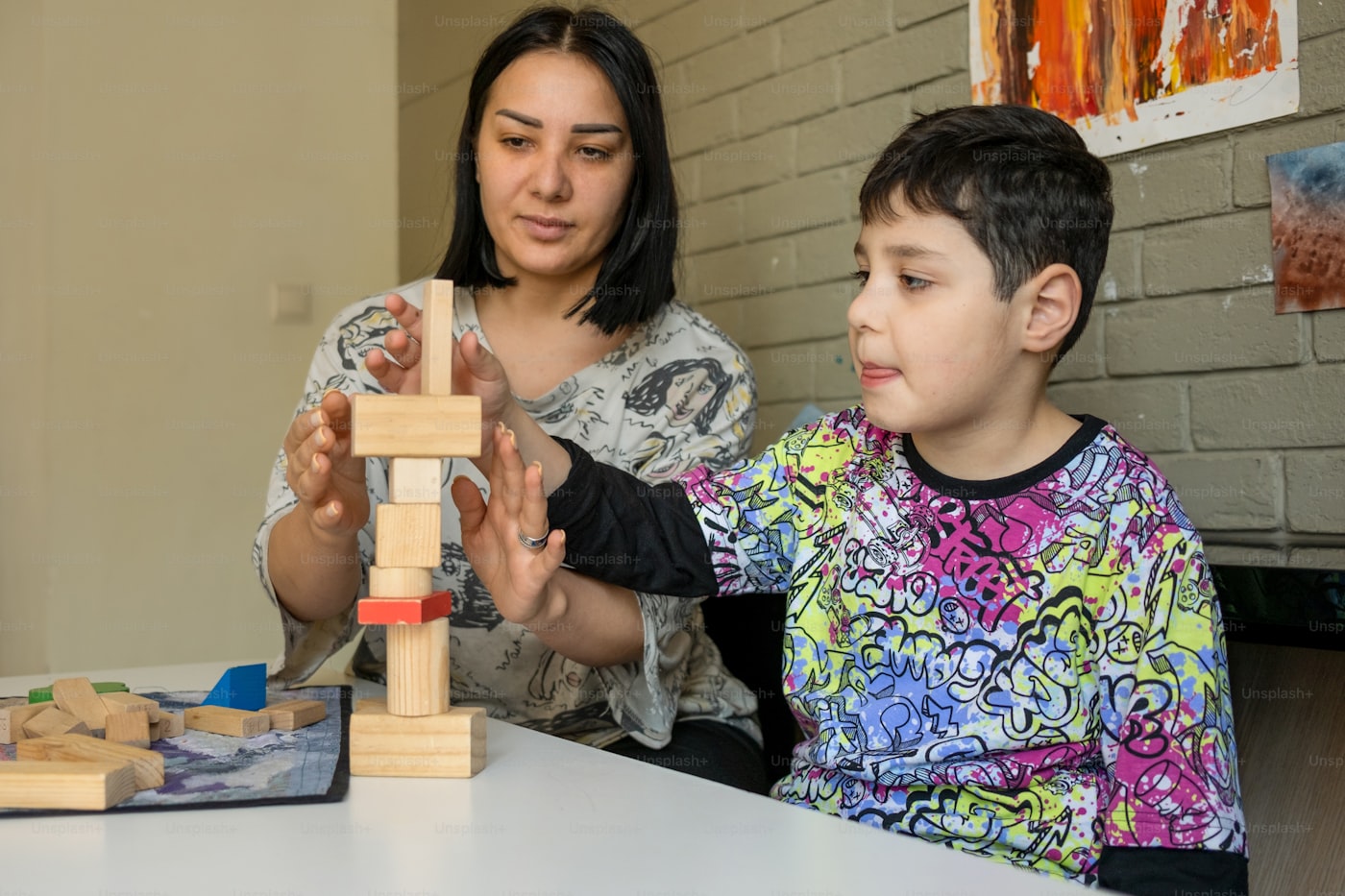
The "virtual autism" question "Virtual autism" is a phrase that has circulated since around 2018, originating with a Romanian psychologist (Marius Zamfir) and later picked up by a US paediatrician (Karen Heffler). The proposal is that very heavy early screen exposure can produce autism-like behavioural signs in some children — flat affect, reduced social engagement, language delay — and that these signs can soften when screens are removed and responsive interaction returns. Heffler and colleagues published a small case-series in *Frontiers in Public Health* in 2020 along these lines.
The research base is genuinely thin. It is not a formally recognised diagnosis, it does not appear in the DSM-5, and most autism researchers regard it as a hypothesis worth investigating rather than a settled finding. Autism is overwhelmingly a heritable, neurological way of being — it is not caused by parenting decisions, and any framing that suggests it is should be read with caution.
Soira's take: a child whose early life is dominated by passive screens may show some signs that overlap with autism — limited social engagement, late language — without being autistic. A child can also be autistic regardless of screen use. In both cases the practical implication is the same: reduce passive screens, increase responsive interaction, and seek a proper developmental assessment if you are worried. The screen-time conversation should never delay an autism evaluation, and an autism evaluation should never absolve a household of looking at its screen patterns.
Why the early years are different The neuroscience makes the parental intuition concrete. Synaptic density peaks in the first three years, and the experiences that get processed during those years shape which neural circuits are reinforced and which are pruned. Language develops in conversation, social cognition develops in face-to-face interaction, and the brain regions responsible for attention develop in response to the kinds of attention demands a child encounters. Screens can offer some of that input, but they cannot replicate the responsive, contingent, slow-paced back-and-forth between a child and a human who knows them.
The economist's framing of "opportunity cost" applies here. Every hour spent watching a screen is an hour not spent doing one of the things small brains specifically need. If the alternative hour would have been spent in a high chair with background noise anyway, swapping for a quiet screen probably changes little. If the alternative hour would have been spent talking, singing, going outside, or being read to, the swap matters.
What actually helps in a busy household The most useful structural changes are small and rarely about minute-counting:
- Turn off autoplay on every streaming service. Autoplay is the single largest reason parents end up with longer screen sessions than they intended.
- Keep mealtimes screen-free. Family meals are one of the highest-density language environments a young child encounters; protecting them is high-impact.
- Co-view what you can. Even ten minutes of "what do you think happened next?" turns the screen from a babysitter into a shared activity.
- Move one screen routine outside. A pre-dinner walk replaces a pre-dinner screen show with the kind of activity a developing brain rewards more.
- Treat the hour before sleep as screen-free. Blue light and arousal both interfere with sleep, and sleep is one of the WHO's protective factors.
These changes are cumulative. A household that adopts one a month finds itself in a meaningfully different place in a season — without the conversation ever feeling like a fight.
A note on autistic children and screens Autistic and likely-autistic children often find screens easier than the alternatives. Predictable, controllable, sensorily-tuned content can feel like a refuge when the rest of the day is overwhelming. That is not a moral failing on anyone's part, and removing screens entirely from a sensory-overloaded child rarely goes well.
What does not change is the underlying biology: an autistic toddler's brain still develops best in responsive, back-and-forth interaction. The right move is rarely to remove screens completely; it is to keep them as part of the day's mix without letting them crowd out the rest of what the brain needs. If you suspect your child may be autistic, what you do about screens and what you do about an autism assessment are separate conversations. Run both. Most paediatricians will support reducing screens regardless of the diagnostic question.